How often are you conscious of turning on a faucet? Do you ever hold your breath, thinking the water might not be there this time? I don’t. Usually, it is a mundane and thoughtless action. Statistically, the average person in the United States uses 27 gallons of water per day from a faucet. For my family of five, this equals 135 gallons per day, 945 gallons per week, and 3,780 gallons per month. Most of us assume that the water will be there. With rare exceptions, we are correct.

In his autobiography, Benjamin Franklin wrote, “When the well runs dry, we know the worth of water.” Imagine yourself in a situation where the well runs dry and the faucet does not produce water as expected. Perhaps you have experienced this. I live in a rural area where many people have wells rather than a municipal water system. On the rare occasion that a well does run dry, there are solutions available, both temporary and long-term. Few of us worry about running out of water.
A 2008 UNFPA report identifies water scarcity as a serious challenge for families living in regions where the dry season limits resources. Water shortages during dry seasons contribute to a variety of social problems, from increased rates of infection due to an inability to maintain necessary hygiene to missed school days when children must fetch water from long distances.
I am honored to serve Lift Global Inc. and partner with Glocal Ventures (GVI), leading teams into a remote community in Northern Vietnam. We work alongside the members of this community to support their dreams and vision for the future. When we entered this community for the first time in 2022, we knew there was a dry season and that water scarcity was an issue for the middle school that we were there to serve. Their water is collected through a gravity-fed system from a mountain stream. During the dry season, that source often decreases significantly. Knowing that we would be arriving just before the onset of the dry season, we planned our activities carefully to make sure that we did not contribute to that scarcity.
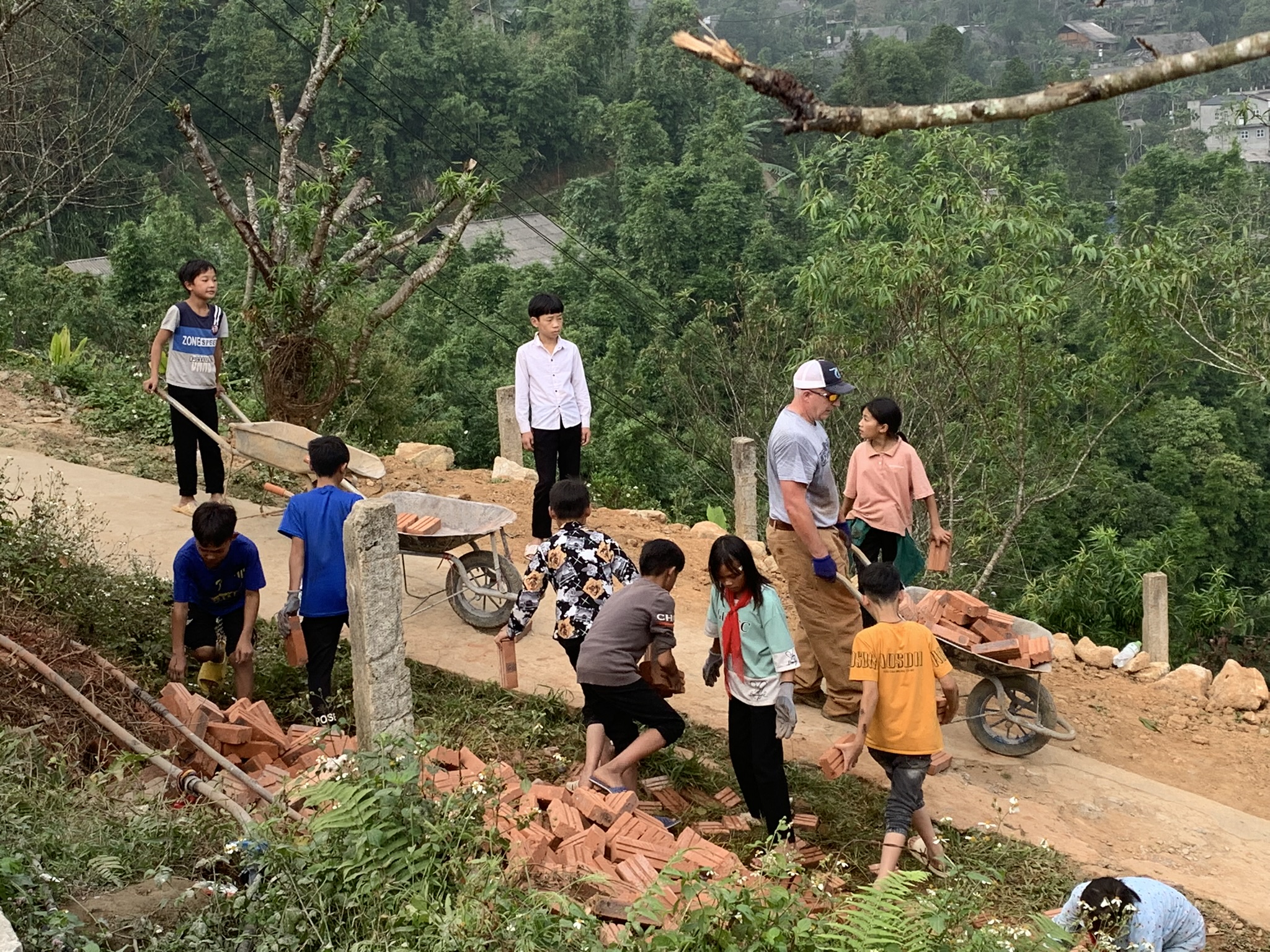
One of the primary goals for our medical team on this trip was to initiate hygiene training at the school. To improve hygiene practices, the students would need a steady supply of water. At the recommendation of GVI, we funded and worked with local contractors on the construction of a larger water cistern for the school.
I wish I could say that I foresaw the impact of that pile of bricks and concrete, but I really did not. The importance of it did not hit me until we returned to the community in 2023 and 2024.

We found:
-New hand-washing stations with soap outside the latrines and kitchen of the school
-A water filtration system that had been impossible without the new cistern
-Over 200 middle-school students and faculty benefit from a reliable water supply
-Increased access to education through weekday housing for primary students whose homes are too remote to make the daily trek (Previously this was only available to middle school students).
-Improved overall student health
I am so grateful for our partnership with GVI. I am thankful for the lessons that I learn each time I travel to Vietnam and for the patience of my friends there as they answer questions and help me to understand their culture and perspective. They have taught me so much about the world.
I did not fully grasp what was happening in 2022 as our team members moved bricks, one wheelbarrow load at a time, to the site of the new cistern. I am beginning to understand the true worth of water.